
The Jacksonville Homeowner’s Guide to HVAC Coil Protection
Living in Jacksonville means enjoying the best of the First Coast, the ocean breeze, the sound of the surf, and the beautiful sunrises. But for your home’s air conditioning system, that salty Atlantic breeze is a silent killer.
If you live in Jacksonville Beach, Neptune Beach, or even a few miles inland in areas like Southside or Mandarin, your HVAC unit is under constant attack from salt spray.
Without the right protection, a brand-new AC and heating system that should last 15 years can fail in as little as 5 or 6.
At Von’s Heating and Air, we see the devastating effects of salt-air corrosion every day. In this guide, we will explain why the salt is so dangerous, how it destroys your efficiency, and the specific steps you can take to protect your investment.
Why Salt Air Destroys HVAC Coils
Your outdoor AC unit relies on aluminum or copper fins and coils to dissipate heat. These metals are highly conductive, which is great for cooling your home, but they are also highly reactive to sodium chloride, which is salt.
When salt-laden moisture from the Atlantic air settles on your HVAC coils, it triggers a process called electrolytic corrosion. This is not just rust. It is a chemical reaction that eats away at the metal, causing:
- Pitting: Tiny holes form in the copper tubing, leading to refrigerant leaks.
- Fin Loss: The thin aluminum fins turn to white powder and flake off.
- Heat Trap: Without the fins, the unit cannot release heat, forcing the compressor to work twice as hard.
The Warning Signs of Coastal HVAC Corrosion
How do you know if the Jacksonville air is already winning the battle? Check your outdoor unit for these three red flags:
- The White Powder Effect: If you see a chalky, white substance on the coils or the base of the unit, that is aluminum oxide, a direct byproduct of salt corrosion.
- Flaking Fins: If the delicate metal vanes on your unit crumble like crackers when touched, your heat transfer capabilities are already compromised.
- Rising Energy Bills: If your JEA bill is climbing but your thermostat has not changed, your unit is likely struggling to breathe through corroded coils.
How to Get Salt-Air Protection for HVAC Coils
The good news is that you do not have to accept a shortened lifespan for your AC. There are three primary ways to fight back.
1. Professional HVAC Coil Coatings
The most effective way to protect a coastal HVAC system is to apply a specialized protective coating. At Von’s Heating and Air, we recommend treating new or deep-cleaned units with an anti-corrosive barrier.
- How it works: A thin, hydrophobic film is applied to the coils. This film is designed to resist salt attachment without insulating the coil, which would reduce efficiency.
- The Benefit: It creates a non-stick surface for salt and moisture, significantly slowing down the oxidation process.
2. Scheduled HVAC Salt Rinses
While it sounds simple, regular air conditioning maintenance is your first line of defense. However, there is a right and wrong way to do it.
- The Right Way: Using a low-pressure garden hose to gently rinse the outdoor coils every two to four weeks. This washes away the salt before it can bond to the metal.
- The Wrong Way: Using a pressure washer. High pressure will bend the delicate aluminum fins, causing more damage than the salt ever would.
3. Strategic HVAC Unit Placement
If you are replacing a unit in a coastal area, placement matters. Positioning the condenser on the side of the house shielded from the prevailing ocean winds, or installing a wind baffle, can reduce the amount of salt spray that enters the cabinet.
Why Waiting Is an Expensive Mistake
Inland Jacksonville homeowners might get away with skipping a year of maintenance. Coastal homeowners cannot.
When salt air causes a leak in your coils, it is rarely a simple fix. Because the metal is structurally weakened by corrosion, patching a coastal coil is often impossible. This leads to a full coil replacement or, in many cases, a total system replacement costing thousands of dollars.
By investing in salt-air protection for HVAC coils early, you are not just buying a coating. You are buying an extra 5-to-7 years of peak performance.
The Von’s Advantage: Jacksonville HVAC Experts for a Local Climate
Not all HVAC companies understand the unique challenges of Duval County. At Von’s Heating and Air, we are a family-owned business with NATE-certified technicians who live and work right here in Jacksonville.
We do not just fix air conditioners. We engineer solutions that survive the Florida climate. When we perform a maintenance check, we are not just looking at wires. We are inspecting your coil integrity and recommending the specific coatings needed to withstand the salt air.
Our Coastal Protection Checklist Includes:
- Deep cleaning of coils to remove existing salt deposits.
- Application of industry-leading anti-corrosive treatments.
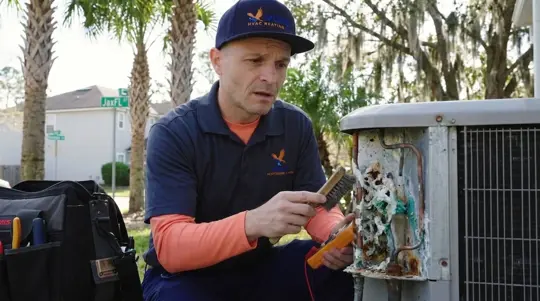
- Inspection of electrical components for salt-related pitting.
- Custom maintenance schedules tailored to your distance from the ocean.
Schedule Your Coastal Protection Audit Today
Do not let the Jacksonville breeze turn your high-efficiency AC into a pile of rust. Whether you’re in a new build in Nocatee or a classic home in Atlantic Beach, your HVAC needs a shield.
Contact Von’s Heating and Air today at (904) 555-0199 or visit our Jacksonville Service Page to schedule a professional coil inspection and protection treatment.