
How to Know When Your HVAC Ductwork Needs Replacing
Your HVAC system keeps your home comfortable year-round. But most homeowners forget about the hidden network running through their walls and ceilings.
Your ductwork carries heated and cooled air to every room. Over time, those ducts break down. They crack, leak, collect dust, and grow mold.
The result? Higher energy bills. Uneven temperatures. Poor air quality inside your home.
If you've noticed any of these problems, your ductwork could be the cause. In this article, we'll cover the warning signs and what replacement involves.
We'll also show you how to get expert help from Von's Heating and Air.
What Does Your HVAC Ductwork Actually Do?
Think of your ducts as your HVAC system's lungs. They pull in air, condition it, and push it through your home.
When those ducts are sealed and clean, everything works smoothly. Your AC unit or furnace runs efficiently, and your energy bills stay predictable.
But when ducts develop leaks or damage, your HVAC system works overtime to compensate. The reason your system strains so hard is that conditioned air escapes before it reaches your rooms.
According to Energy Star, leaky ducts can reduce your HVAC system's efficiency by 20% or more. That lost efficiency shows up directly on your monthly energy bill.
How Long Does HVAC Ductwork Last?
Well-maintained HVAC ductwork typically lasts 20 to 25 years. But several factors speed up that timeline.
Florida's humidity is a big one. Moisture causes metal ducts to corrode faster than in dry climates. The combination of heat, humidity, and condensation wears down seals and insulation quickly.
Other factors include the original materials used and the quality of the initial installation.
If your home's ductwork is over 10 years old, have it inspected by an HVAC professional. Catching small problems early saves you from a full replacement down the road.
Warning Signs Your Ducts Are Failing
Here are the clearest signals your HVAC ductwork is due for attention:
- Uneven temperatures room to room. Some rooms stay hot while others feel fine. This inconsistency points to leaky or disconnected duct sections.
- Rising energy bills with no change in usage. Your HVAC system is working harder because conditioned air is escaping through cracks and gaps.
- Dust buildup that won't quit. Damaged ducts pull in attic dust, insulation particles, and allergens, then circulate them through your home.
- Musty or stale odors from your vents. This smell often signals mold or mildew growing inside your duct system.
- Rattling, whistling, or whooshing sounds. Strange noises from your vents indicate loose connections, blockages, or physical damage.
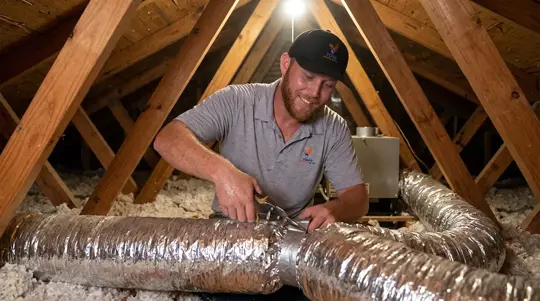
- Visible cracks, holes, or tears. If you can see damage on exposed ductwork, there's likely more hidden behind your walls.
Even one of these signs is worth investigating. Multiple signs together strongly suggest your ducts are past their prime.
What You Gain From New HVAC Ductwork
Replacing old, leaky ducts isn't just a repair. It's an upgrade to your entire home's comfort.
Better air quality. New, sealed ductwork stops dust, mold spores, and allergens from circulating through your home. This change is especially noticeable for anyone with allergies or asthma.
Lower energy bills. Properly sealed ducts keep conditioned air where it belongs. Your AC unit or furnace runs less often, and your monthly costs drop.
Consistent comfort in every room. No more hot spots in the living room or cold corners in the bedroom. Even airflow means even temperatures.
A quieter home. Insulated ductwork reduces the rattling and whooshing that comes with aging ducts.
A longer life for your HVAC equipment. When your ducts work properly, your AC unit and furnace don't strain to keep up. This reduced workload extends their lifespan significantly.
What Does HVAC Ductwork Replacement Cost?
For a typical single-family home, expect to pay between $5,000 and $25,000 for a full ductwork replacement.
The final price depends on a few key factors:
- Home size and duct layout. Larger homes with complex layouts cost more.
- Materials. Flexible ductwork is less expensive than rigid metal ducting.
- Labor and access. Hard-to-reach areas like tight attics increase labor time and cost.
- Removal of old ducts. Tearing out existing ductwork adds to the project scope.
- Sealing and insulation. Proper sealing is essential for long-term efficiency and comfort.
Don't choose a contractor based on the lowest bid alone. Look at experience, reputation, and the warranties they offer.
How Long Does Ductwork Replacement Take?
Most ductwork replacement projects take 2 to 5 days.
During Florida's summer months, extreme attic heat slows the installation crew down. Winter projects tend to move faster and often cost less.
Smaller homes with straightforward layouts finish quicker. Larger homes or unexpected damage can extend the timeline.
Your HVAC contractor will inspect your system first. They'll give you a more accurate estimate based on your home's layout.
Get Your HVAC Ductwork Inspected by Von's Heating and Air
Spotted any of the warning signs above? Don't wait for the problem to get worse. Damaged ductwork drives up your energy costs every day it goes unaddressed. It also reduces your indoor air quality.
The team at Von's Heating and Air specializes in ductwork inspection, cleaning, repair, and full replacement for homes in Orange Park and the surrounding Jacksonville area.
Call Von's Heating and Air at (904) 621-2953 to schedule your ductwork inspection today. Or visit the contact page to book online.